In 1961, Dr. Martin Luther King Jr. came to the Central District; what did he see?
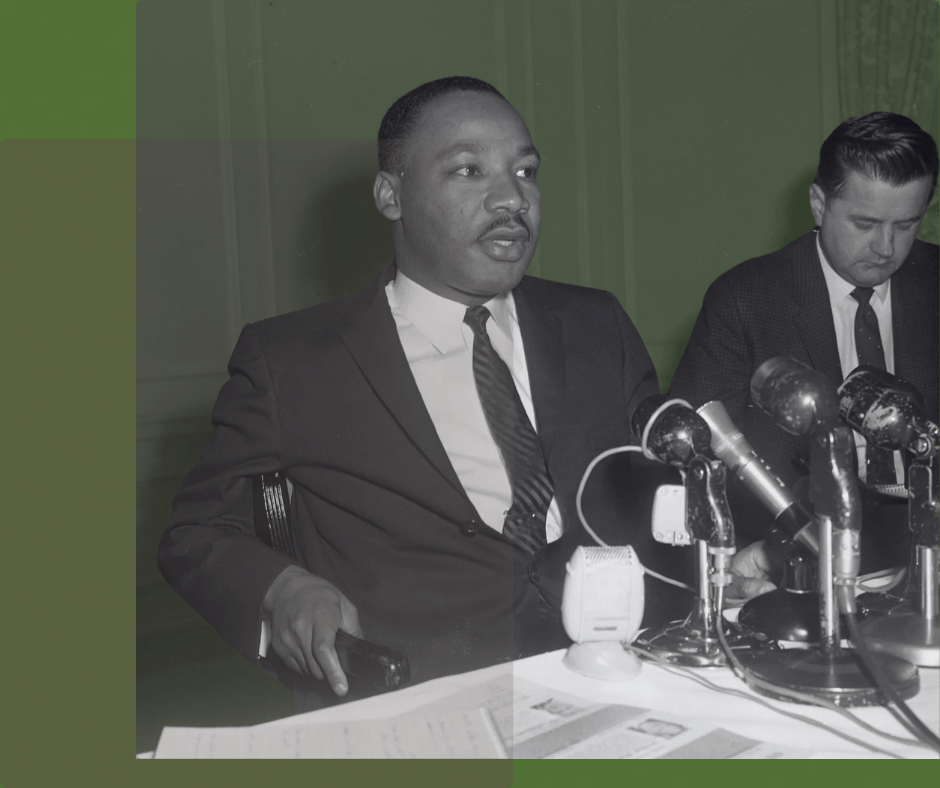
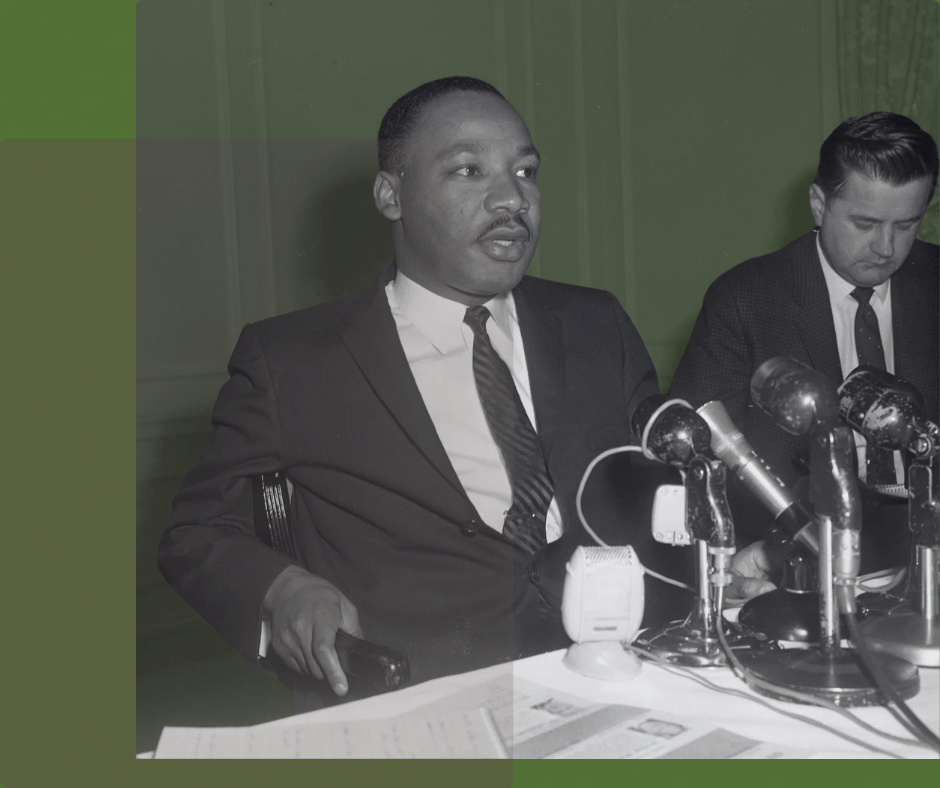
Two years before the March on Washington and his legendary I Have a Dream speech, Dr. Martin Luther King Jr. made his first and only visit to Seattle in 1961. Hosted by his fellow Morehouse College brother, the late Reverend Samuel B. McKinney of Mt. Zion Baptist Church, Dr. King spoke at locations including the University of Washington to teeming crowds and gave two back-to-back speeches at Garfield High School to accommodate the enthusiastic student body.
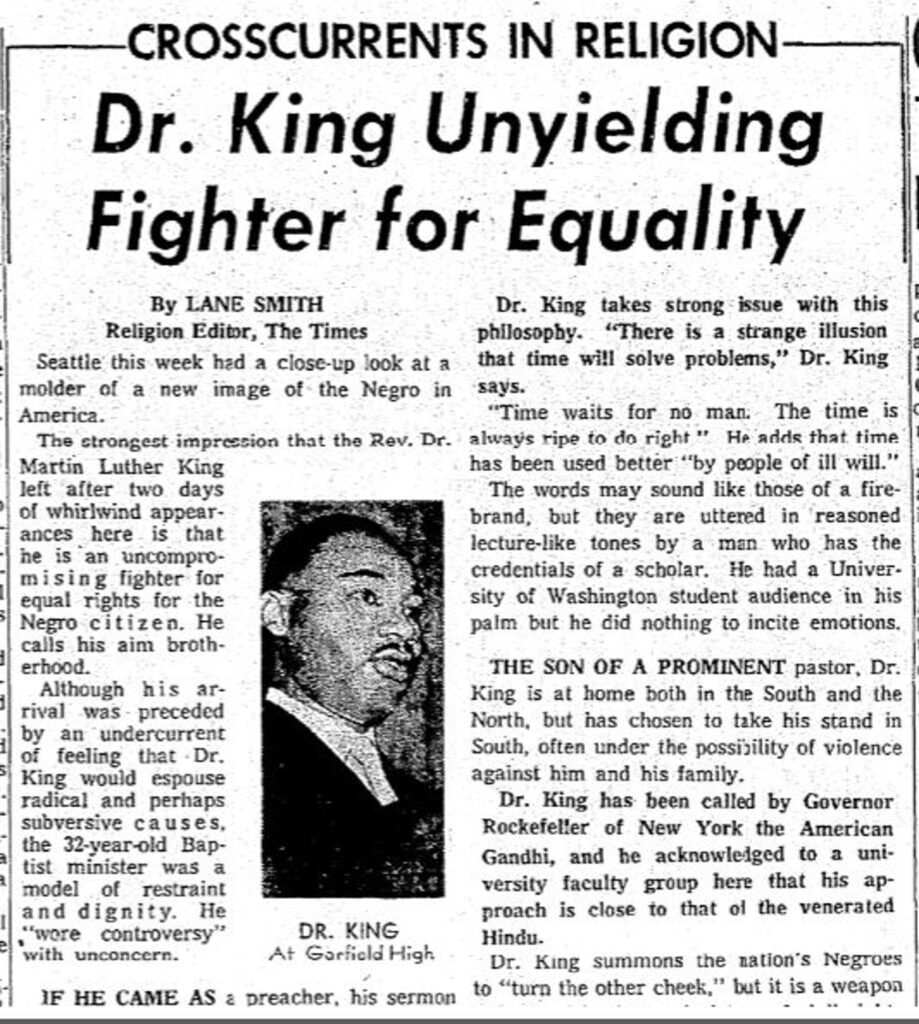
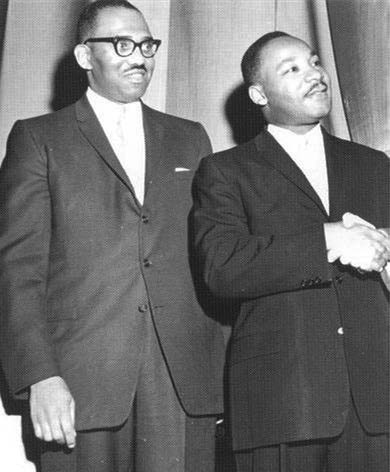
Dr. King in the Seattle Times. Rev McKinney and Dr. King, 1961.
Dr. King spent his spare time with his hosts in the Central District, famously requesting barbecue at neighborhood favorite, R.L.’s Home of Good Barbecue on Yesler Way, and reportedly staying there until 4am enjoying the food and catching up with old friends.
During Dr. King’s visit in 1961, 90% of Seattle’s Black population lived in the Central District.
Decades of segregation through institutional redlining and racist housing covenants confined the Black population to the neighborhood, however the community made the most of it – building a strong and vibrant enclave of popular, Black-owned businesses and institutions. By 1961, the annual Mardi Gras Festival (now known as Umoja Fest) had been celebrated for decades, sponsored collectively by local business owners.
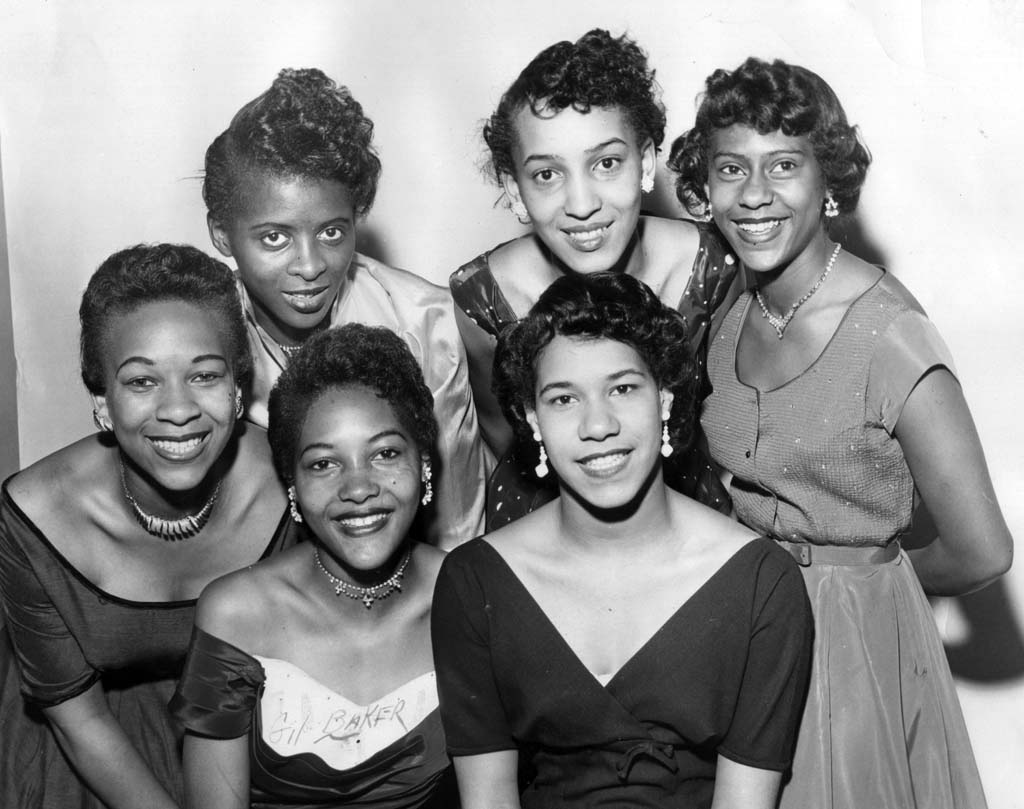
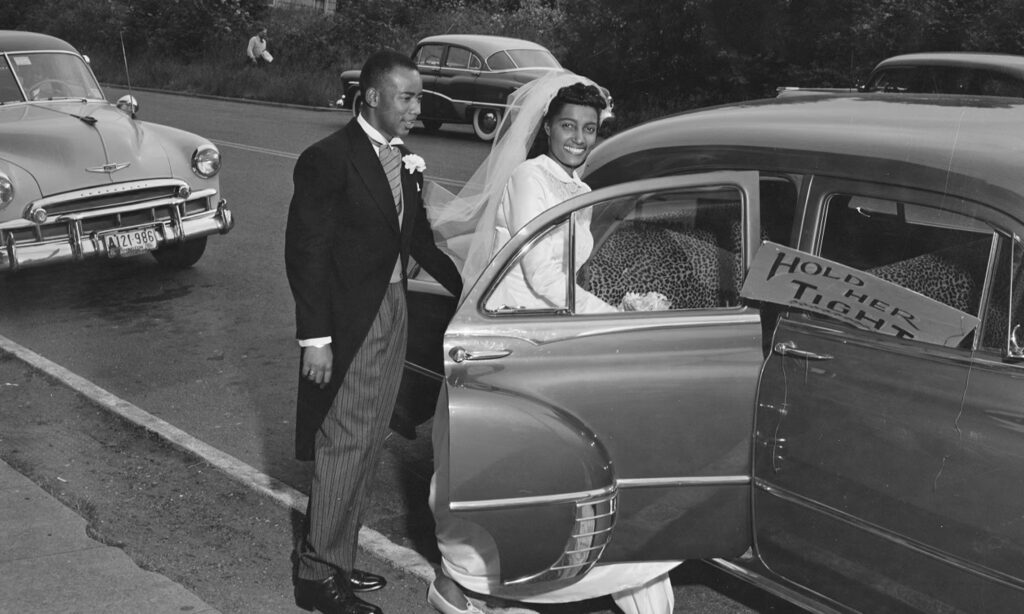
Black life in Seattle. Mardi Gras princesses, 1955. Couple getting married, Seattle 1951, Al Smith.
Decades later, in 2005, King County, Washington officially changed its namesake from former Vice President and slaveholder Rufus King to recognize Dr. Martin Luther King, making the symbolic move to become the largest county in the nation to honor him.
The gesture begs the question, how has the county honored him, not only symbolically, but also in practice through its policies and investment in Black equity since his visit 64 years ago?
King County Logo, established 2005. Seattle’s racial wealth gap among the top 10 in the nation, Seattle Times.
Dr. King met a community that was 75% Black with 50% Black homeownership and Union, Cherry, Yesler and Jackson Street corridors lined with Black cultural institutions and thriving Black-owned businesses.
Since then:
- Black homeownership in Martin Luther King Jr. County has declined to 28%,
- The Black population in the Central District has diminished to 15%,
- Black families have lost up to $15.8 billion in intergenerational wealth due to racist housing policies,
- Seattle’s racial income gap has grown to one of the widest in the nation with Black families earning less than 50% of white and Asian household incomes
- Home of Good Barbeque, which famously hosted Dr. King along with Sammy Davis Jr, James Earl Jones, B.B. King, Donny Hathaway and others, closed after 66 years in business.
As we take time on King’s national holiday to remember his work and legacy, it is also an opportunity to recommit to continuing his work. ACLT remains dedicated to equity for Black Seattle, developing the permanently affordable housing and supporting the Black-owned businesses necessary to restore the Central District as a place where Black legacy, culture, belonging and prosperity can endure for generations.